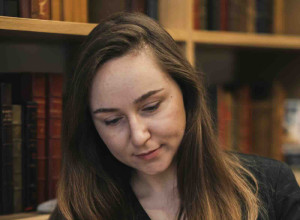
Le Feu Follet's Adélaïde Carton on the Rare Book Trade in France
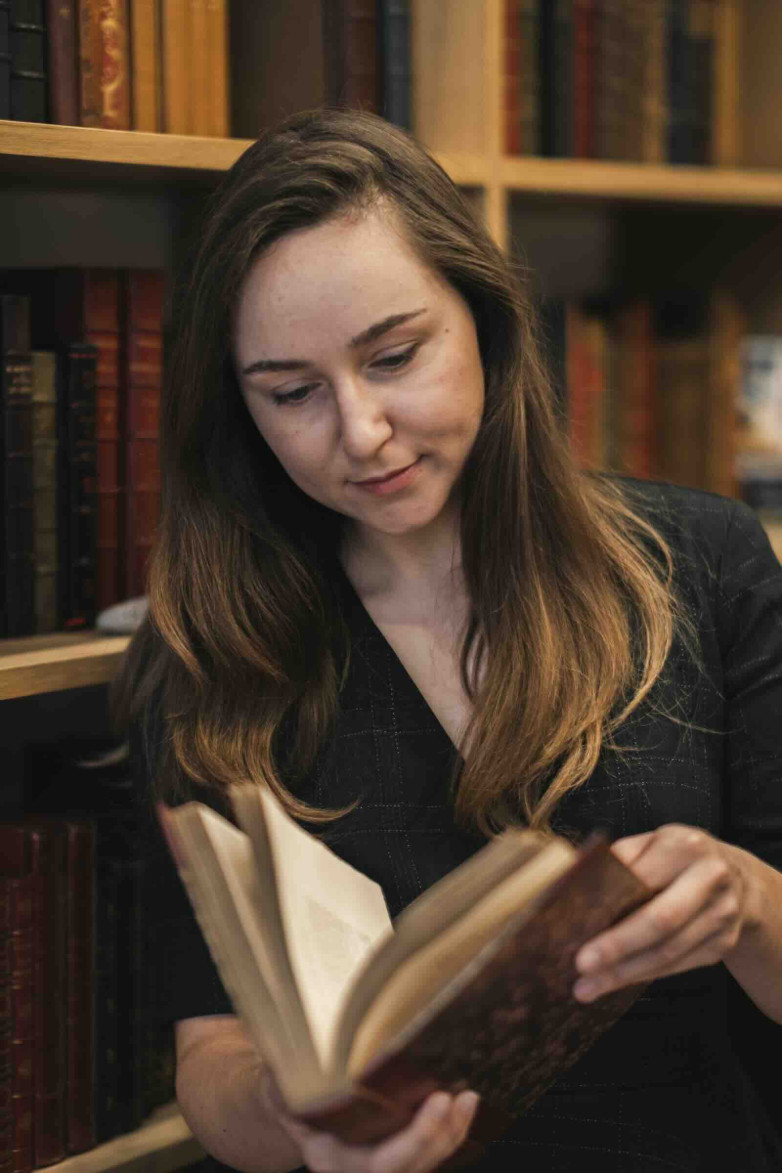
Adélaïde Carton



Our Bright Young Booksellers series continues today with Adélaïde Carton of Le Feu Follet – Edition-Originale in Paris, France:
How did you get started in rare books?
Completely by chance. I had quickly tired of excavation sites after just a few weeks of digging in the venerable city of Saint-Denis, and decided to try my luck elsewhere: I was 19 years old when Le Feu Follet hired me as an intern and I never quite left, except for a short stint at Sotheby’s Rare Book Department in Paris and some degrees at the Ecole du Louvre and Sorbonne.
When did you Librairie Le Feu Follet open and what do you specialize in?
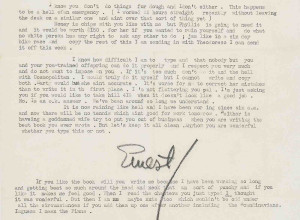
The director and founder Pascal Antoine opened its doors in 1998 and started mainly dealing with 19th-20th century literature. At the time of my arrival things had grown into a bustling bookshop and I first worked with literary manuscripts and letters, as well as a monumental Description de l’Egypte. Since then I have evolved into a kind of jack-of-all-trades and thankfully receive invaluable help from my seasoned colleagues.
What do you love about the book trade?
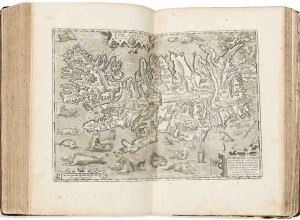
Its utter unpredictability. It gives you an opportunity to challenge yourself as well as learn from clients and fellow booksellers. I remember spending hours with Academician François Weyergans talking about Maurice Béjart with whom he shared a deep and lasting friendship, or endlessly going back and forth with a dealer about an unknown watermark on a Munster map. You never know what will come across your desk, and this perpetual sense of wonder is a privilege.
Could you tell our readers about the rare book trade in France?
I think the trade is at a crossroads between very different ways of collecting: gone are the days of giant libraries with exhaustive ensembles of every book ever published by one particular author; today's collectors show more restraint and concentrate their efforts on a handful of well-chosen titles. As for booksellers, we are confronted with a shortage of supply. The great libraries built up over the twentieth century have, for the most part, already found their way into institutions or been dispersed, and what remains in private hands now tends to stay there longer or never appear in France as the books are purchased from abroad. Rare books are, quite literally, getting rarer to chase.
The internet has reshaped the trade almost as much as this shift in taste has: buyers now reach us directly from all over the world without the intermediary of a physical visit, which has made the market more transparent, but also considerably more competitive. A fine manuscript no longer waits quietly for the right collector to wander in.
None of this makes for a shrinking trade. We're seeing younger collectors, and a renewed interest in areas such as women writers, occultism, artists' books... France remains a treasure trove of incredible books and incredible authors, and our attachment to culture makes for a varied clientele from all walks of life and backgrounds.
Describe a typical day for you:
After replying to a mountain of valuation requests, I move on to bibliographical research to complete the descriptions of our latest acquisitions. Some time is devoted to fulfilling some specific requests – does this include all of Champlain’s travels? What does that blind stamp say? Is this plate a later addition? Can you help me select a gift for my wife? Someone chose Madame Bovary… not my suggestion!
More often than not, I end up chatting with a few clients in the shop and time gets away from me. Once a year I make my way to New York with some of our books for the NYABF.
Favorite rare book (or ephemera) that you’ve handled?
Not the most valuable, surely, but the author’s copy of Roland Dorgelès’ Bouquet de Bohème, a wonderful book of memoirs on Montmartre which I discovered contained the only known photograph of a memorable party Dorgelès talks about in the book. In 1913, famous Montmartre illustrator Francisque Poulbot had been given notice to vacate his atelier. He then organized this legendary 'Fête des Dernières Cartouches' as a last hurrah. They dressed as soldiers from the Franco-Prussian War and created such a stir across Paris that people thought the Germans had come back again. It was such a joy to discover the merry band of participants on this photo Dorgelès had carefully preserved and bound in his own copy.
What makes a great collector?
Tenacity and patience. I admire the attitude of some of our clients who are unafraid to wait years for a specific book, and pounce in seconds when a copy appears.
What do you personally collect?
A mic-mac of everything… travel accounts of Greece and Turkey, Beat generation books, vinyls, engraved ex-libris, Etruscan antiquities, Félicien Rops engravings, books and maps related to the Seine, which I adore and swim in weekly (when the weather permits it). I also assembled a small collection on the Bièvre, a now mostly dried up Parisian river which used to run under my apartment building.
What are your interests outside of work?
Aside from attending quite a lot of concerts ranging from baroque to EDM, I spend a lot of time cooking with my family and learning about the history of cooking techniques. I once gifted a relative an 18th century charcuterie recipe book. We tried the ham cooked under heaps of hay, but the dogs dug it up and ate it behind our backs!
What changes in the rare book trade most excite — or concern — you?
The trade is naturally evolving alongside our increasingly connected world. Half of our clientele is already from abroad, and while some bemoan this imbalance, I welcome it. As one of the first online rare bookshops in France, Le Feu Follet enjoyed greater visibility and helped collectors from all over the world find the finest books. The next challenge is already here: what to make of AI and rare books? Some people already turn to AI for book suggestions or valuations before coming to us. The generated answers are still very questionable.
Any upcoming fairs or catalogs?
We will issue a carefully curated selection of new acquisitions in the fall. The catalog is to include an array of presentation copies exchanged between giants of literature, never-seen-before manuscripts… and among them a letter by a saint, no less!